

In Review: The Tragedy of Liberation: A History of the Chinese Revolution, 1945–1957. Frank Dikötter. New Delhi: Bloomsbury, 2017. 376 pages.
Introduction
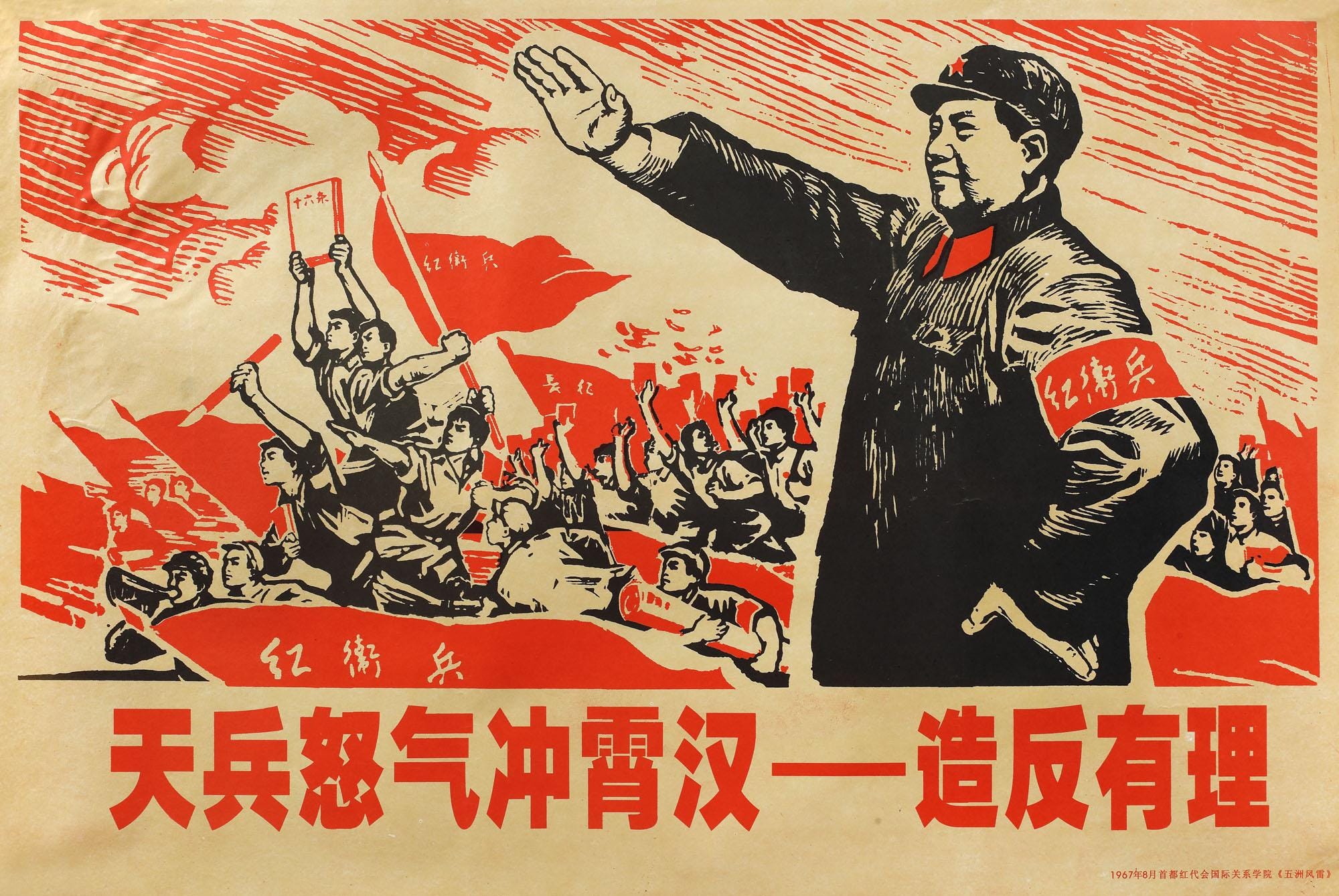
The People’s Republic of China (PRC) describes the Communist Revolution of 1949 as a ‘liberation’, but for millions of Chinese, it was nothing of the sort. When we think of regime change after a civil war, our imagination turns to violence inflicted upon belligerents or the collateral damage to civilians caught in the crossfire. In China’s case, however, Communist victory itself was a devastation as the implementation of Maoist ideology exacted a human cost as staggering as an active conflict. Frank Dikötter’s The Tragedy of Liberation recounts the everyday suffering of ordinary Chinese during the early years of Communist rule.
While the atrocities in Maoist China during the Great Leap Forward and the Cultural Revolution are relatively well known, the author illuminates the formative years of Communist rule, when the Chinese Communist Party (CCP) transformed itself from a revolutionary movement into a party-state. Reduced to statistics in historical memory, the Chinese masses emerge in his account as individuals navigating fear, dispossession, and debasement. The author writes that roughly five million perished prematurely in the first decade of Maoist rule, while tens of millions more endured lives marked by despair.
The book traverses the period between Japan’s defeat in World War II in 1945 and the Hundred Flowers Campaign of 1956–1957, when Chairman Mao encountered his first serious intellectual backlash. Moving chronologically across four parts, Dikötter opens with the devastation of the civil war: the brutal siege warfare in Manchuria, desperate scavenging to sustain the war effort, Shanghai’s financial collapse under a faltering Nationalist regime, and the swift Communist takeover of southwestern China. As the CCP consolidates power, the narrative shifts to the remaking of socio-political life through land reform, agricultural collectivisation, and strict information control, while tracing the consequences of the Korean War. The story darkens further with campaigns of ideological purification, such as internal anti-corruption purges, thought reform, and the spread of gulags. The author concludes with Mao’s response to De-Stalinisation, his suppression of dissent, and the careful cultivation of his image as the Great Helmsman.
State-Making in Communist China
While reading this book, I found myself reflecting on how a political scientist might engage with a work so rigorously grounded in archival evidence. Without a conceptual hinge, Dikötter’s account risks reading as an unrelenting catalogue of suffering so brutal that the agony of life in 1950s China numbs more than it expresses. At its core, The Tragedy of Liberation is a story of state-making. Since the People’s Republic was forged in violence, Charles Tilly’s seminal essay ‘War Making and State Making as Organised Crime’ offers a compelling lens. As he writes, ‘if protection rackets represent organised crime at its smoothest, then war making and state making [...] qualify as our largest examples of organised crime.’ For Tilly, nation-states emerge through organised violence: mobilising resources for war, cultivating clients for protection, and eliminating rivals both beyond and within the territory. Though derived from European experiences, the framework fairly maps onto how the CCP consolidated power in its first decade of rule.
The arrival of the People’s Liberation Army in Chinese towns was ‘a carefully choreographed procession’ (p. 39). For many, it brought relief from the misery of Western exploitation, Japanese invasion, and the civil war. Many Chinese expatriates, such as Li Zhisui, who would later become Mao’s private doctor, were pulled home by the promise of a new China (p. 41). Millions who feared communism fled to Hong Kong or crossed the Taiwan Strait, and countless families were torn apart as ‘soldiers and government officials had left some of the women and children behind in the rush to escape’ (p. 45).
The first task in state-making was to instil the dogma of class struggle among the masses, which until then remained confined to Communist cadres. This required imposing a rigid social divide. The new state identified the constituencies to be protected and then schooled them in the grammar of revolution. As Dikötter notes, ‘every individual was given a class label’, categorised according to ‘their presumed loyalty towards the revolution’ (p. 47). Society was reduced to two categories, red/friend or black/foe, labels that ‘would determine a person’s fate for decades to come, as children inherited the status of the head of the household’ (p. 48). Re-education centres proliferated to indoctrinate sympathisers into Communist dogma, while non-Communist parties and selected businesses were folded into a broader coalition under the rhetoric of New Democracy. Ideological purity demanded sacrifice as people were urged to reduce consumption, embrace frugality, and renounce material pleasure. The systemic shock jolted everyday life, altering livelihoods, appearances, and even the way people dressed.
Land reform merged the twin processes of extraction and protection at the heart of state-making. The radicalisation of peasants cultivated the conviction that ‘anyone who has land is a tyrant, and all gentry are bad’ (p. 63). When cadres unleashed all-out class struggle in the countryside, it served a dual purpose. Land was confiscated from landlords and rich peasants and redistributed, while the state simultaneously cultivated a loyal political base. The violence of forced dispossession also fractured the traditional fabric of village life. People were taught to despise the wealthy, and class struggle became a vehicle for settling familial feuds and personal scores. The campaign’s reach was staggering as ‘by the end of 1951, over ten million landlords had been expropriated, and more than 40 per cent of land had changed hands’ (p. 83). Extraction and state capacity grew together. The campaigns that destroyed one class built the base of another.
As Max Weber would argue, the state is a political entity that has a monopoly over the legitimate use of violence. Though violence lay at the heart of Communist state-making, its legitimacy remained contested in the early 1950s. Capitalists were wary of the Party cadres, youth disillusioned by economic stagnation, and government officials afraid to lose their jobs. The CCP had not secured the broad base of clients whose protection would justify the state’s authority. The Korean War changed the calculus. Domestically, Mao authorised a sweeping campaign against ‘remnant nationalist forces, secret agents, bandits, and counter-revolutionaries’ (p. 85). What followed was a reign of terror that cemented the Communist monopoly on violence, though legitimacy was forged less through accommodation than elimination. The methodical scale of this terror is evident in a single fact: Mao issued death quotas across the country, sanctioning the killing of one in every thousand people (p. 87).
A bamboo curtain descended on China’s borders. Traditionally exotic to foreigners, China under Communist rule came to regard everything foreign as a reminder of imperialism. As Dikötter writes, ‘every trace of foreign involvement in the economy, religion, education and culture was considered incompatible with the goals of a new China—from missionary schools, democratic institutions, international banks and foreign films down to legal language and street signs in English’ (p. 109). Quotas were imposed on departing foreigners, cadres grew hostile to outsiders, and the state censored foreign correspondents. The CCP thus consolidated a monopoly over the flow of information, with propaganda becoming the sole medium of political communication.
The Korean War further revealed the extractive character of the Communist state. More than 55 per cent of the 1951 budget was diverted towards war financing, while grain extraction from farmers intensified to sustain the war effort (p. 142). As the principal staging ground for intervention, the region of Manchuria descended into misery. Food shortages triggered starvation, and some families were forced to sell their children. The United States’ embargo on the PRC in 1950–1951 deepened the pressure. Meanwhile, rumours of bacteriological warfare allegedly waged by American pilots produced a man-made ecological disaster. Sick people were dipped in pesticides, public gardens set ablaze, rat-hunting quotas imposed, and dogs culled en masse (pp. 147–150). Though the war ended in a stalemate, the mass hysteria it unleashed demonstrated the extraordinary capacity of the state to shape belief and mobilise an entire population around irrational fear. The making of the Chinese state now seemed complete.
From State-Making to Thought Engineering
Though a functioning state had emerged by the early 1950s, consolidation remained elusive. It is here that Tilly’s framework reaches its limits in explaining state-making in the PRC. He explains how states are made, but offers no account of when formation ends, or of what happens when the state turns against the very constituencies it once claimed to protect. Dikötter hints at this through Mao’s anxious invocation of Li Zicheng, the folk hero who conquered the capital but failed to hold it (p. 156). In the mid-1950s, Mao launched an anti-corruption campaign to stem the embezzlement corroding the Communist state. What began as a purge of corrupt officials soon engulfed society, breaking the back of the politician-business nexus and extinguishing the last remnants of private capital. Party members were not spared, as even minor transgressions from the distant past were unearthed and punished.
In Maoist China, ideological purity demanded conformity in public life and submission in the innermost realm of thought. Economic life followed the same logic. Tools, seeds, and farm animals were declared communal property; collectivisation dissolved the boundary between the individual and the state (pp. 208–210). The economic ruin this produced was severe, but the deeper consequence was the death of the will to work. When individual desire is extinguished, only fear remains. Fear, as a motivator, produces a society governed by the zero-sum instincts of survival, where denouncing a neighbour becomes rational, loyalty becomes performative, and no one steps forward who does not have to. No degree of state coercion could substitute for the motivation it had destroyed. Slackness and defection became endemic. Farmers fled the countryside when they failed to meet assigned quotas, and Party officials preyed on the masses they were meant to serve.
Then came what seemed a more fundamental solution. Rather than policing lapses in state machinery, why not shape the thoughts of the people themselves? The regime turned inward, towards the minds of the people. Thought reform expanded into a sweeping project of social engineering, reaching into books, music, cinema, and religious belief. Beethoven and Mozart were condemned as bourgeois (p. 192), Buddhism and Confucianism dismissed as relics of a feudal past (pp. 198–201), and Hollywood denounced as reactionary (p. 195). The assault moved beyond private property to private belief itself. Intellectuals became de facto enemies, for they represented the one thing the state could not collectivise: the freedom to think. By 1956–1957, the accumulated weight of this suppression had quietly turned intellectual sentiment against Mao. The Hundred Flowers Campaign, ostensibly an invitation to speak freely, revealed the depth of that resentment.
Why Should India Read This Book?
India and China are two populous civilisational giants that came to their modern-day nation-state avatars at similar times. Thus, it is natural to compare their journeys, given the significant divergence they have undergone over the last eight decades. While China delivered majestic economic growth, India achieved an astonishing feat in successfully preserving a pluralist society. The essay reminds us that war-making and the use of violence are an inherent part of state-making.
As Tilly would argue, wars make states and states make wars. The establishment narrative of India’s state-making revolving around ideas of Nehruvian socialism and the Gandhian legacy of non-violence provides an incomplete picture. However, the state-making project in India was more than what it was projected—more than adhering to the democratic ideals and the story of unity-in-diversity. When one thinks about state-making in India from this perspective, one would realise that India also used violence to support its unification in getting some regions on board.
Episodes like the annexation of Hyderabad and the liberation of Goa remind us that India was not a soft state as it has been projected in the establishment historiography. The recent achievement in eradicating Left-Wing Extremism and India’s vast experience in tackling counterinsurgencies successfully further push the argument home. At the same time, the state-making project in India remains incomplete as it is yet to become a Westphalian state in the truest sense, to have defined territorial borders, especially in the west and in the north. Going by Tilly’s logic, it is because the Republic of India has not fought wars that have required large sections of society to step up in the war effort. The Tragedy of Liberation reminds us of the price that China paid for taking its state-making project to the extreme. Therefore, to what extent are we, in India, ready for the trade-off to finish the state-making project and endure its societal consequences? To what extent can we trade our personal comforts for building a national character? War has made the Indian state, but is the Indian state ready to make war?
Conclusion
The Tragedy of Liberation draws on a rich archive of official records, memoirs, and local accounts to reconstruct the day-to-day experience of living under Communist rule. Read as an exercise in state-making, it systematically unravels the first decade of Communist rule: mobilisation of violence, extraction of resources, manufacture of loyalty, and elimination of rivals in the pursuit of order. Nonetheless, the CCP did not stop once it had secured a monopoly over violence and information. It turned inward, seeking to discipline thought itself. In doing so, the revolution crossed the boundary between governing society and remaking human nature. The deeper tragedy of this liberation was that the more it sought to free the masses, the more it stripped them of the liberty to think, choose, and live as individuals.
This brings us to the book’s most significant limitation, and here Dikötter’s own ideological priors deserve scrutiny. His libertarian anti-statism makes him instinctively alert to extraction, coercion, and the predatory character of state power, which is why the Tilly framework maps so naturally onto his account. But it also produces a history that is prosecutorial rather than analytical. Despite being a totalitarian, Mao is accorded an almost godlike agency in Dikötter’s account, appearing responsible not only for major policy decisions but also for their most distant and unintended consequences.
The book opens with the presumption that Communist China was a story of ‘calculated terror and systemic violence’ (p. xi) and proceeds to demonstrate what it has already decided. The evidence serves only to confirm the thesis rather than stress-test its assumptions. The result is an enormously rich archive of human suffering, narratively compelling and morally serious, yet short of the dispassion that historical scholarship demands.
Ambuj Sahu is a visiting assistant professor at Rishihood University. He is a PhD candidate in the Department of Political Science at Indiana University, and a recipient of the Smith Richardson Foundation World Politics and Statecraft Fellowship.

good review... i haven’t read Dikotter yet, but the tilly framing makes sense from your review. one book Iid put alongside it is Vogel's work on Deng. Vogel covers the same period from inside the system.. including Deng’s role in land reform and later the Anti-Rightist Campaign where around 55 lakh intellectuals were branded rightists. what makes his work interesting is that he shows both Deng’s role in building the system and later in dismantling parts of it... he even finds deng arguing in the 1940s that peasants should keep what they produced above a reasonable tax which later done in the household responsibility system... so i wonder if the lesson for India is less about accepting the trade-off and more about whether the trade-off itself was the mistake.